
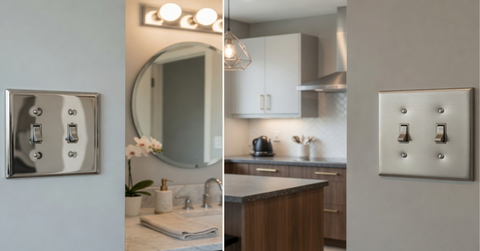
If you are at a hardware store, looking at rows of beautiful fixtures but are unable to decide between brushed nickel and stainless steel, you are in the right place.
Firstly, you are not the only one facing this issue. In case you are updating your master bathroom and are worried about the selection of hardware for kitchen renovation, the brushed nickel vs stainless steel debate hits bigger than it should.
Here’s what you are probably thinking about:
- Will brushed nickel look outdated in five years?
- Does stainless steel show every single water spot?
- Which one lasts longer?
- Which finish will you love the most?
All these questions must be triggering you, and below are the answers to these questions. Both finishes bring their own strengths to the table, but they are not the same. Brushed nickel gives a warm look that hides fingerprints and water spots.
On the other hand, stainless steel is the marathon runner of finishes, built to last decades with incredible corrosion resistance.
Brushed Nickel vs Stainless Steel
Before making the final choice, you must know what you are actually buying. These are not just various colours, but are fundamentally various materials with different pros and cons. You should know in detail about both before taking a final decision.
What is Brushed Nickel?
It is a finish that is applied to another base metal by the process of electroplating. The base could be brass, zinc, or steel. And this also sees how long your fixture will remain. The real magic takes place after the nickel coating goes on.
Manufacturers run a wire brush on the surface, and subtle grooves and faint lines get created. After this, a matte look is seen. This textured surface makes brushed nickel forgiving, so it hides fingerprints and water spots.
The nickel alloy is mostly nickel with additions of zinc, copper, and iron sometimes. Most of the manufacturers cover a nickel layer with a transparent coating. Not only does brushing improve appearance, but it also lessens light reflection. It helps to cover up small scratches, water stains, and fingerprints.
The warm tone that results from its nickel content is what distinguishes brushed nickel. When using conventional or transitional design schemes, this creates a gentle, mellow gloss.
In contrast to smoother finishes, the surface seems a little gritty to the touch.The most essential thing is color consistency, which varies across manufacturers, unlike standardized finishes like chrome.
What is Stainless Steel?
Stainless steel is an entirely different beast. This steel is an actual alloy, which means the material is consistent all the way through. Iron and chromium make up the majority of the alloy, with chromium making up more than 10.5%. Because chromium is a unique component, it forms a thin, imperceptible oxide coating on the surface.
It stops corrosion and rust. You will most frequently come across 304 stainless steel at home, which performs admirably in the majority of applications, and 316 stainless steel, which offers greater corrosion resistance for harsh or maritime conditions.
Depending upon the specific grade, the alloy can actually contain elements like carbon, nickel, and molybdenum. Stainless steel is a solid material throughout a fixture or as plating applied over another metal core. Solid stainless steel has super durability, mainly for outdoor applications.
If you need that brushed look on stainless steel, mechanical processing is involved. The industry standard for brushed stainless steel is the No. 4 Finish, which has short and parallel polishing lines. This is done by polishing belts and brushing with 150-180 grit abrasives.
In return, you get a mildly reflective, unidirectional surface quality with a muted color and very fine lines. The hardness of stainless steel types 304 and 316 allows for fine-grain lines without warping, making them ideal for brushed metal finishing.
The Real Difference That Matters the Most
The major difference is that stainless steel is an alloy that can be solid throughout, whereas brushed nickel is always a coating applied to another base metal. This difference is supreme, which affects everything about how these finished products perform.
The chromium in stainless steel has a self-healing oxide layer that protects against corrosion throughout. Whereas brushed nickel relies on a thin plating that can wear through over time.
Stainless steel keeps its color and appearance longer, especially in moist conditions. While brushed nickel has decent corrosion resistance through its nickel coating.
This protection decreases as the plating wears. Stainless steel outperforms brushed nickel in durability, especially in environments with moisture exposure and frequent wear.
Brushed Nickel vs Stainless Steel for Bathroom Fixtures
Bathrooms are tough on fixtures. Your finish choice really matters as there is a daily splash of water, steamy showers, and constant touching. You will get the answer below on how these two finishes actually perform.
1. Bathroom Faucet Comparison
Brushed nickel faucets are incredibly forgiving. The warm undertones hide water spots and fingerprints in seconds. You can go a number of days without wiping them down, and they still look clean. The nickel coating handles the bathroom very well.
Stainless steel faucets work entirely differently. As it is an alloy. It fights corrosion from the inside out rather than depending on a surface coating. Grade 304 works amazingly for most of the bathrooms. Stainless steel won’t peel; it can take a beating without showing damage.
2. Stainless Steel shower heads vs Brushed Nickel
Stainless Steel’s non-porous surface shrugs off water damage and keeps its appearance the same for years. The shine does not decrease even with daily use. And it is hygienic too. Brushed nickel shower heads bring warmth and charm. They are perfect for traditional or cozy bathrooms where you want to feel softer. The finish holds up against corrosion and tarnish.
3. Towel bars and accessories
Brushed nickel tower bars are maintenance-free. Just wipe away fingerprints or smudges when you see them. The finish plays well with various accessories.
Brushed Nickel vs Stainless Steel for Kitchen Fixtures
Kitchens are where finishes really get put to the test. Your fixtures are subjected to heat, food acids, and far more daily abuse than anything in your bathroom due to frequent cooking, cleaning, and handling.
1. Kitchen Faucet performance
Brushed nickel brings warmth and elegance that make the kitchen welcoming. It is a coating over another metal. Kitchen faucets see a lot of action, and that constant contact can take its toll on nickel plating over time.
Stainless steel really shines. It is a solid alloy even when it does get scratched. Water spots show up like neon signs on that surface.
2. Sink hardware and accessories
Brushed finishes naturally complement one another in stainless steel appliances. Using a gentle cloth and light soap, both finishes are simple. Compared to shinier materials, brushed nickel is better at hiding smudges.
3. The price reality
Stainless steel costs more than brushed nickel. It uses quality materials and treatments, which makes it more costly than basic options. Brushed nickel is generally more affordable than stainless steel.
Making the Final Decision
When you choose Brushed Nickel, it shines brightest in kitchen themes. The warm, inviting tone feels right when you are opting cozy farmhouse vibes or classic elegance. The subtle tones work beautifully in modern spaces also.
In terms of budget, brushed nickel wins. This finish lets you put money towards other priorities without sacrificing style. The matte finish gives that soft, understated look that does not need attention.
When Stainless Steel is Worth Every Penny
Stainless steel is your sweetest friend in modern, industrial, or minimalist spaces. Its high-gloss shine adds the right amount of interest. It costs more upfront, but you are buying once and forgetting about it for decades.

Comments (0)
There are no comments for this article. Be the first one to leave a message!